
Tổng hợp các atomic class Atomic
Giới thiệu về Atomic atomic class
Atomic dịch sang tiếng Việt có nghĩa là “nguyên tử”. Trong hóa học, nguyên tử là đơn vị nhỏ nhất cấu tạo nên vật chất và không thể bị phân chia trong phản ứng hóa học. Trong lập trình, Atomic chỉ một operation có tính atomic, tức operation đó không thể bị phân chia hoặc ngắt giữa chừng. Ngay cả khi được thực thi đồng thời bởi nhiều thread, operation đó hoặc hoàn tất toàn bộ, hoặc không thực thi; các thread khác sẽ không nhìn thấy trạng thái hoàn tất một phần.
Nói đơn giản, atomic class là class có các operation mang tính atomic.
Các atomic class trong package java.util.concurrent.atomic cung cấp một cách thread-safe để thao tác với một biến đơn lẻ.
Các atomic class dựa trên optimistic lock CAS (Compare-And-Swap, so sánh và trao đổi) để bảo đảm tính atomic cho method, không cần sử dụng cơ chế lock truyền thống (chẳng hạn block synchronized hoặc ReentrantLock).
Bài viết này chỉ giới thiệu khái niệm về Atomic atomic class; để biết nguyên lý triển khai cụ thể, bạn có thể đọc bài viết Giải thích chi tiết về CAS do tác giả viết.
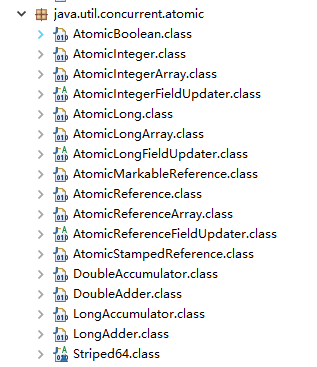
Dựa trên kiểu dữ liệu được thao tác, có thể chia các atomic class trong gói JUC thành 4 nhóm:
1. Basic types
Cập nhật basic type theo cách atomic
AtomicInteger: atomic class cho kiểuintAtomicLong: atomic class cho kiểulongAtomicBoolean: atomic class kiểu boolean
2. Array types
Cập nhật một phần tử trong array theo cách atomic
AtomicIntegerArray: atomic class cho array kiểuintAtomicLongArray: atomic class cho array kiểulongAtomicReferenceArray: atomic class cho array kiểu reference
3. Reference types
AtomicReference: atomic class kiểu referenceAtomicMarkableReference: cập nhật atomic một reference có mark. Class này liên kết mark boolean với reference, có thể phát hiện sự thay đổi giữa hai trạng thái do business quy ước; tuy nhiên, mark một bit không thể ghi lại số lần thay đổi version bất kỳ.AtomicStampedReference: cập nhật atomic một reference có version number. Class này liên kết một giá trịintvới reference, có thể dùng để cập nhật data và version number của data một cách atomic, đồng thời giải quyết vấn đề ABA có thể xảy ra khi dùng CAS để cập nhật atomic.
So với AtomicMarkableReference, AtomicStampedReference dùng version number kiểu int, phù hợp hơn để phát hiện reference đã trải qua nhiều lần thay đổi giữa hai lần đọc hay chưa.
4. Atomic class cập nhật thuộc tính của object
AtomicIntegerFieldUpdater: updater để cập nhật atomic field kiểuintAtomicLongFieldUpdater: updater để cập nhật atomic field kiểu longAtomicReferenceFieldUpdater: updater để cập nhật atomic field kiểu reference
Atomic class cho basic type
Cập nhật basic type theo cách atomic
AtomicInteger: atomic class cho kiểuintAtomicLong: atomic class kiểu longAtomicBoolean: atomic class kiểu boolean
Ba class trên cung cấp các method gần như giống nhau, vì vậy ở đây dùng AtomicInteger làm ví dụ để giới thiệu.
Các method thường dùng của class AtomicInteger:
public final int get() // Lấy giá trị hiện tại
public final int getAndSet(int newValue)// Lấy giá trị hiện tại và đặt giá trị mới
public final int getAndIncrement()// Lấy giá trị hiện tại và tăng lên 1
public final int getAndDecrement() // Lấy giá trị hiện tại và giảm đi 1
public final int getAndAdd(int delta) // Lấy giá trị hiện tại và cộng thêm delta
boolean compareAndSet(int expect, int update) // Nếu giá trị đầu vào bằng giá trị dự kiến, đặt giá trị đó thành giá trị đầu vào (update) theo cách atomic
public final void lazySet(int newValue)// Cuối cùng đặt thành newValue; lazySet cung cấp ngữ nghĩa yếu hơn method set, có thể khiến các thread khác vẫn đọc được giá trị cũ trong một khoảng thời gian ngắn sau đó, nhưng có thể hiệu quả hơn.
Ví dụ sử dụng class AtomicInteger:
// Khởi tạo object AtomicInteger với giá trị ban đầu là 0
AtomicInteger atomicInt = new AtomicInteger(0);

// Dùng method getAndSet để lấy giá trị hiện tại và đặt giá trị mới là 3
int tempValue = atomicInt.getAndSet(3);
System.out.println("tempValue: " + tempValue + "; atomicInt: " + atomicInt);

// Dùng method getAndIncrement để lấy giá trị hiện tại và tăng lên 1
tempValue = atomicInt.getAndIncrement();
System.out.println("tempValue: " + tempValue + "; atomicInt: " + atomicInt);

// Dùng method getAndAdd để lấy giá trị hiện tại và tăng thêm giá trị chỉ định là 5
tempValue = atomicInt.getAndAdd(5);
System.out.println("tempValue: " + tempValue + "; atomicInt: " + atomicInt);

// Dùng method compareAndSet để cập nhật có điều kiện theo cách atomic, giá trị kỳ vọng là 9, giá trị cập nhật là 10
boolean updateSuccess = atomicInt.compareAndSet(9, 10);
System.out.println("Update Success: " + updateSuccess + "; atomicInt: " + atomicInt);

// Lấy giá trị hiện tại
int currentValue = atomicInt.get();
System.out.println("Current value: " + currentValue);

// Dùng method lazySet để đặt giá trị mới là 15
atomicInt.lazySet(15);
System.out.println("After lazySet, atomicInt: " + atomicInt);
Kết quả:
tempValue: 0; atomicInt: 3
tempValue: 3; atomicInt: 4
tempValue: 4; atomicInt: 9
Update Success: true; atomicInt: 10
Current value: 10
After lazySet, atomicInt: 15
Atomic class cho array type
Cập nhật một phần tử trong array theo cách atomic
AtomicIntegerArray: atomic class cho array kiểuintAtomicLongArray: atomic class cho array kiểulongAtomicReferenceArray: atomic class cho array kiểu reference
Ba class trên cung cấp các method gần như giống nhau, vì vậy ở đây dùng AtomicIntegerArray làm ví dụ để giới thiệu.
Các method thường dùng của class AtomicIntegerArray:
public final int get(int i) // Lấy giá trị phần tử tại vị trí có index=i
public final int getAndSet(int i, int newValue)// Trả về giá trị hiện tại ở vị trí index=i và đặt nó thành giá trị mới: newValue
public final int getAndIncrement(int i)// Lấy giá trị phần tử tại vị trí index=i và tăng phần tử ở vị trí đó lên 1
public final int getAndDecrement(int i) // Lấy giá trị phần tử tại vị trí index=i và giảm phần tử ở vị trí đó đi 1
public final int getAndAdd(int i, int delta) // Lấy giá trị phần tử tại vị trí index=i và cộng thêm delta
boolean compareAndSet(int i, int expect, int update) // Nếu giá trị đầu vào bằng giá trị dự kiến, đặt giá trị phần tử tại vị trí index=i thành giá trị đầu vào (update) theo cách atomic
public final void lazySet(int i, int newValue)// Cuối cùng đặt phần tử tại vị trí index=i thành newValue; sau khi dùng lazySet, các thread khác có thể vẫn đọc được giá trị cũ trong một khoảng thời gian ngắn sau đó.
Ví dụ sử dụng class AtomicIntegerArray:
int[] nums = {1, 2, 3, 4, 5, 6};
// Tạo AtomicIntegerArray
AtomicIntegerArray atomicArray = new AtomicIntegerArray(nums);

// In giá trị ban đầu trong AtomicIntegerArray
System.out.println("Initial values in AtomicIntegerArray:");
for (int j = 0; j < nums.length; j++) {
    System.out.print("Index " + j + ": " + atomicArray.get(j) + " ");
}

// Dùng method getAndSet để đặt giá trị tại index 0 thành 2 và trả về giá trị cũ
int tempValue = atomicArray.getAndSet(0, 2);
System.out.println("\nAfter getAndSet(0, 2):");
System.out.println("Returned value: " + tempValue);
for (int j = 0; j < atomicArray.length(); j++) {
    System.out.print("Index " + j + ": " + atomicArray.get(j) + " ");
}

// Dùng method getAndIncrement để tăng giá trị tại index 0 lên 1 và trả về giá trị cũ
tempValue = atomicArray.getAndIncrement(0);
System.out.println("\nAfter getAndIncrement(0):");
System.out.println("Returned value: " + tempValue);
for (int j = 0; j < atomicArray.length(); j++) {
    System.out.print("Index " + j + ": " + atomicArray.get(j) + " ");
}

// Dùng method getAndAdd để tăng giá trị tại index 0 thêm 5 và trả về giá trị cũ
tempValue = atomicArray.getAndAdd(0, 5);
System.out.println("\nAfter getAndAdd(0, 5):");
System.out.println("Returned value: " + tempValue);
for (int j = 0; j < atomicArray.length(); j++) {
    System.out.print("Index " + j + ": " + atomicArray.get(j) + " ");
}
Kết quả:
Initial values in AtomicIntegerArray:
Index 0: 1 Index 1: 2 Index 2: 3 Index 3: 4 Index 4: 5 Index 5: 6
After getAndSet(0, 2):
Returned value: 1
Index 0: 2 Index 1: 2 Index 2: 3 Index 3: 4 Index 4: 5 Index 5: 6
After getAndIncrement(0):
Returned value: 2
Index 0: 3 Index 1: 2 Index 2: 3 Index 3: 4 Index 4: 5 Index 5: 6
After getAndAdd(0, 5):
Returned value: 3
Index 0: 8 Index 1: 2 Index 2: 3 Index 3: 4 Index 4: 5 Index 5: 6
Atomic class cho reference type
Atomic class cho basic type chỉ có thể cập nhật một biến. Nếu cần cập nhật atomic nhiều biến, cần dùng atomic class cho reference type.
AtomicReference: atomic class kiểu referenceAtomicStampedReference: cập nhật atomic một reference có version number. Class này liên kết một giá trịintvới reference, có thể dùng để cập nhật data và version number của data một cách atomic, đồng thời giải quyết vấn đề ABA có thể xảy ra khi dùng CAS để cập nhật atomic.AtomicMarkableReference: cập nhật atomic một reference có mark. Class này liên kết mark boolean với reference,cũng có thể giải quyết vấn đề ABA có thể xảy ra khi dùng CAS để cập nhật atomic.
Ba class trên cung cấp các method gần như giống nhau, vì vậy ở đây dùng AtomicReference làm ví dụ để giới thiệu.
Ví dụ sử dụng class AtomicReference:
// Class Person
class Person {
    private String name;
    private int age;
    // Bỏ qua getter/setter và toString
}


// Tạo object AtomicReference và đặt giá trị ban đầu
AtomicReference<Person> ar = new AtomicReference<>(new Person("SnailClimb", 22));

// In giá trị ban đầu
System.out.println("Initial Person: " + ar.get().toString());

// Cập nhật giá trị
Person updatePerson = new Person("Daisy", 20);
ar.compareAndSet(ar.get(), updatePerson);

// In giá trị sau khi cập nhật
System.out.println("Updated Person: " + ar.get().toString());

// Thử cập nhật lần nữa
Person anotherUpdatePerson = new Person("John", 30);
boolean isUpdated = ar.compareAndSet(updatePerson, anotherUpdatePerson);

// In việc cập nhật có thành công hay không và giá trị cuối cùng
System.out.println("Second Update Success: " + isUpdated);
System.out.println("Final Person: " + ar.get().toString());
Kết quả:
Initial Person: Person{name='SnailClimb', age=22}
Updated Person: Person{name='Daisy', age=20}
Second Update Success: true
Final Person: Person{name='John', age=30}
Ví dụ sử dụng class AtomicStampedReference:
// Tạo một object AtomicStampedReference, giá trị ban đầu là "SnailClimb", version number ban đầu là 1
AtomicStampedReference<String> asr = new AtomicStampedReference<>("SnailClimb", 1);

// In giá trị ban đầu và version number
int[] initialStamp = new int[1];
String initialRef = asr.get(initialStamp);
System.out.println("Initial Reference: " + initialRef + ", Initial Stamp: " + initialStamp[0]);

// Cập nhật giá trị và version number
int oldStamp = initialStamp[0];
String oldRef = initialRef;
String newRef = "Daisy";
int newStamp = oldStamp + 1;

boolean isUpdated = asr.compareAndSet(oldRef, newRef, oldStamp, newStamp);
System.out.println("Update Success: " + isUpdated);

// In giá trị và version number sau khi cập nhật
int[] updatedStamp = new int[1];
String updatedRef = asr.get(updatedStamp);
System.out.println("Updated Reference: " + updatedRef + ", Updated Stamp: " + updatedStamp[0]);

// Thử cập nhật bằng version number sai
boolean isUpdatedWithWrongStamp = asr.compareAndSet(newRef, "John", oldStamp, newStamp + 1);
System.out.println("Update with Wrong Stamp Success: " + isUpdatedWithWrongStamp);

// In giá trị và version number cuối cùng
int[] finalStamp = new int[1];
String finalRef = asr.get(finalStamp);
System.out.println("Final Reference: " + finalRef + ", Final Stamp: " + finalStamp[0]);
Kết quả như sau:
Initial Reference: SnailClimb, Initial Stamp: 1
Update Success: true
Updated Reference: Daisy, Updated Stamp: 2
Update with Wrong Stamp Success: false
Final Reference: Daisy, Final Stamp: 2
Ví dụ sử dụng class AtomicMarkableReference:
// Tạo một object AtomicMarkableReference, giá trị ban đầu là "SnailClimb", mark ban đầu là false
AtomicMarkableReference<String> amr = new AtomicMarkableReference<>("SnailClimb", false);

// In giá trị ban đầu và mark
boolean[] initialMark = new boolean[1];
String initialRef = amr.get(initialMark);
System.out.println("Initial Reference: " + initialRef + ", Initial Mark: " + initialMark[0]);

// Cập nhật giá trị và mark
String oldRef = initialRef;
String newRef = "Daisy";
boolean oldMark = initialMark[0];
boolean newMark = true;

boolean isUpdated = amr.compareAndSet(oldRef, newRef, oldMark, newMark);
System.out.println("Update Success: " + isUpdated);

// In giá trị và mark sau khi cập nhật
boolean[] updatedMark = new boolean[1];
String updatedRef = amr.get(updatedMark);
System.out.println("Updated Reference: " + updatedRef + ", Updated Mark: " + updatedMark[0]);

// Thử cập nhật bằng mark sai
boolean isUpdatedWithWrongMark = amr.compareAndSet(newRef, "John", oldMark, !newMark);
System.out.println("Update with Wrong Mark Success: " + isUpdatedWithWrongMark);

// In giá trị và mark cuối cùng
boolean[] finalMark = new boolean[1];
String finalRef = amr.get(finalMark);
System.out.println("Final Reference: " + finalRef + ", Final Mark: " + finalMark[0]);
Kết quả như sau:
Initial Reference: SnailClimb, Initial Mark: false
Update Success: true
Updated Reference: Daisy, Updated Mark: true
Update with Wrong Mark Success: false
Final Reference: Daisy, Final Mark: true
Atomic class cập nhật thuộc tính của object
Khi cần cập nhật atomic một field trong một class, cần dùng atomic class cập nhật field của object.
AtomicIntegerFieldUpdater: updater để cập nhật atomic field kiểuintAtomicLongFieldUpdater: updater để cập nhật atomic field kiểulongAtomicReferenceFieldUpdater: updater để cập nhật atomic field kiểu reference
Để cập nhật atomic một thuộc tính của object, cần hai bước. Thứ nhất, vì các atomic class cập nhật thuộc tính của object đều là abstract class, mỗi lần sử dụng phải dùng static method newUpdater() để tạo updater, đồng thời chỉ định class và field cần cập nhật. Thứ hai, target field phải được khai báo với volatile và có type khớp với updater: int, long hoặc reference type; đồng thời không được là field static hoặc final.
Ba class trên cung cấp các method gần như giống nhau, vì vậy ở đây dùng AtomicIntegerFieldUpdater làm ví dụ để giới thiệu.
Ví dụ sử dụng class AtomicIntegerFieldUpdater:
// Class Person
class Person {
    private String name;
    // Để sử dụng AtomicIntegerFieldUpdater, field phải là volatile int
    volatile int age;
    // Bỏ qua getter/setter và toString
}

// Tạo object AtomicIntegerFieldUpdater
AtomicIntegerFieldUpdater<Person> ageUpdater = AtomicIntegerFieldUpdater.newUpdater(Person.class, "age");

// Tạo object Person
Person person = new Person("SnailClimb", 22);

// In giá trị ban đầu
System.out.println("Initial Person: " + person);

// Cập nhật field age
ageUpdater.incrementAndGet(person); // Tăng lên 1
System.out.println("After Increment: " + person);

ageUpdater.addAndGet(person, 5); // Tăng thêm 5
System.out.println("After Adding 5: " + person);

ageUpdater.compareAndSet(person, 28, 30); // Nếu giá trị hiện tại là 28 thì đặt thành 30
System.out.println("After Compare and Set (28 to 30): " + person);

// Thử cập nhật bằng giá trị so sánh sai
boolean isUpdated = ageUpdater.compareAndSet(person, 28, 35); // Lần này phải thất bại
System.out.println("Compare and Set (28 to 35) Success: " + isUpdated);
System.out.println("Final Person: " + person);
Kết quả:
Initial Person: Name: SnailClimb, Age: 22
After Increment: Name: SnailClimb, Age: 23
After Adding 5: Name: SnailClimb, Age: 28
After Compare and Set (28 to 30): Name: SnailClimb, Age: 30
Compare and Set (28 to 35) Success: false
Final Person: Name: SnailClimb, Age: 30
Tài liệu tham khảo
- 《Nghệ thuật lập trình concurrent trong Java》
Lời cuối
Nếu nội dung hữu ích với bạn, hãy tiện tay tặng JavaGuide một Star miễn phí để ủng hộ: GitHub | Gitee.
JavaGuide đã được duy trì gần bảy năm, tích lũy 6100+ commit, với sự chung tay hoàn thiện của 620+ contributor. Star, phản hồi và PR của bạn đều là động lực để dự án tiếp tục cập nhật.
Nếu bạn đang chuẩn bị phỏng vấn backend / phát triển ứng dụng AI, có thể tham khảo Knowledge Planet của tôi, bao gồm các project thực tế về backend và AI, tối ưu CV, hỏi đáp 1-1 và tài liệu về các trọng điểm thường gặp, đã được duy trì liên tục sáu năm.