
Phân tích nguyên lý annotation @Async
Annotation @Async do framework Spring cung cấp. Class hoặc method được đánh dấu bằng annotation này sẽ thực thi trong thread bất đồng bộ. Điều đó có nghĩa là khi method được gọi, caller sẽ không chờ method thực thi xong mà có thể tiếp tục thực thi code phía sau.
Cách sử dụng annotation @Async rất đơn giản, cần hai bước:
- Thêm annotation
@EnableAsyncvào class khởi động để bật tác vụ bất đồng bộ. - Thêm annotation
@Asyncvào method hoặc class cần thực thi bất đồng bộ.
@SpringBootApplication
// Bật tác vụ bất đồng bộ
@EnableAsync
public class YourApplication {

    public static void main(String[] args) {
        SpringApplication.run(YourApplication.class, args);
    }
}

// Class service bất đồng bộ
@Service
public class MyService {

    // Khuyến nghị sử dụng thread pool tùy chỉnh, ở đây chỉ minh họa cách dùng cơ bản
    @Async
    public CompletableFuture<String> doSomethingAsync() {

        // Ở đây sẽ có một số thao tác nghiệp vụ tốn thời gian
        // ...
        // CompletableFuture giúp xử lý kết quả của tác vụ bất đồng bộ thuận tiện hơn, tránh block thread chính
        return CompletableFuture.completedFuture("Async Task Completed");
    }

}
Tiếp theo, hãy cùng tìm hiểu nguyên lý bên trong của @Async.
Phân tích nguyên lý @Async
@Async thực thi tác vụ bất đồng bộ, về bản chất được triển khai bằng dynamic proxy. Thông qua post processor BeanPostProcessor của Spring, một dynamic proxy được tạo cho class sử dụng annotation @Async. Sau đó, lời gọi đến method có annotation @Async sẽ bị dynamic proxy chặn lại; trong interceptor, việc thực thi method được đóng gói thành tác vụ bất đồng bộ và gửi cho thread pool xử lý.
Tiếp theo, chúng ta sẽ phân tích chi tiết.
Bật bất đồng bộ
Trước khi sử dụng @Async, cần thêm @EnableAsync vào class khởi động để bật tính năng bất đồng bộ. Annotation @EnableAsync như sau:
// Lược bỏ các annotation khác ...
@Import(AsyncConfigurationSelector.class)
public @interface EnableAsync { /* ... */ }
Annotation @EnableAsync sử dụng annotation @Import để đưa AsyncConfigurationSelector vào, vì vậy Spring sẽ load class được đưa vào thông qua annotation @Import.
Class AsyncConfigurationSelector triển khai interface ImportSelector, vì vậy class này override method selectImports() để tùy chỉnh logic load Bean, như sau:
public class AsyncConfigurationSelector extends AdviceModeImportSelector<EnableAsync> {
	@Override
	@Nullable
	public String[] selectImports(AdviceMode adviceMode) {
		switch (adviceMode) {
	   // Advice dựa trên việc dệt bằng proxy Spring AOP, cụ thể có thể sử dụng JDK dynamic proxy hoặc CGLIB
			case PROXY:
				return new String[] {ProxyAsyncConfiguration.class.getName()};
    // Advice dựa trên việc dệt bằng AspectJ
			case ASPECTJ:
				return new String[] {ASYNC_EXECUTION_ASPECT_CONFIGURATION_CLASS_NAME};
			default:
				return null;
		}
	}
}
Trong method selectImports(), các class khác nhau sẽ được chọn để load tùy theo loại advice. Giá trị mặc định của adviceMode là PROXY.
Ở đây lấy advice dựa trên proxy Spring AOP làm ví dụ. Khi đó, class ProxyAsyncConfiguration sẽ được load như sau:
@Configuration
@Role(BeanDefinition.ROLE_INFRASTRUCTURE)
public class ProxyAsyncConfiguration extends AbstractAsyncConfiguration {
	@Bean(name = TaskManagementConfigUtils.ASYNC_ANNOTATION_PROCESSOR_BEAN_NAME)
	@Role(BeanDefinition.ROLE_INFRASTRUCTURE)
	public AsyncAnnotationBeanPostProcessor asyncAdvisor() {
			 // ...
   // Load post processor
		AsyncAnnotationBeanPostProcessor bpp = new AsyncAnnotationBeanPostProcessor();

   // ...
		return bpp;
	}
}
Post processor
Trong class ProxyAsyncConfiguration, một post processor AsyncAnnotationBeanPostProcessor sẽ được load thông qua annotation @Bean. Post processor này là yếu tố then chốt giúp annotation @Async có hiệu lực.
Nếu một class hoặc method sử dụng annotation @Async, processor AsyncAnnotationBeanPostProcessor sẽ tạo một dynamic proxy cho class đó.
Khi method của class này được thực thi, nó sẽ bị interceptor của proxy object chặn lại; method được đánh dấu bằng @Async sẽ thực thi bất đồng bộ.
Code của AsyncAnnotationBeanPostProcessor như sau:
public class AsyncAnnotationBeanPostProcessor extends AbstractBeanFactoryAwareAdvisingPostProcessor {
	@Override
	public void setBeanFactory(BeanFactory beanFactory) {
		super.setBeanFactory(beanFactory);
   // Tạo AsyncAnnotationAdvisor, đây là một Advisor
   // dùng để chặn các method có annotation @Async và thực thi các method này bất đồng bộ.
		AsyncAnnotationAdvisor advisor = new AsyncAnnotationAdvisor(this.executor, this.exceptionHandler);
   // Nếu đã thiết lập asyncAnnotationType tùy chỉnh thì đặt nó vào advisor.
   // asyncAnnotationType dùng để chỉ định annotation bất đồng bộ tùy chỉnh, ví dụ @MyAsync.
		if (this.asyncAnnotationType != null) {
			advisor.setAsyncAnnotationType(this.asyncAnnotationType);
		}
		advisor.setBeanFactory(beanFactory);
		this.advisor = advisor;
	}
}
Class cha của AsyncAnnotationBeanPostProcessor triển khai interface BeanFactoryAware, vì vậy class này override method setBeanFactory() làm extension point để load AsyncAnnotationAdvisor.
Tạo Advisor
Advisor là abstraction của Spring AOP đối với Advice và Pointcut. Advice là logic advice được thực thi, còn Pointcut là điểm cắt nơi advice được thực thi.
Post processor AsyncAnnotationBeanPostProcessor sẽ tạo AsyncAnnotationAdvisor. Trong constructor của nó, Advice và Pointcut tương ứng sẽ được xây dựng như sau:
public class AsyncAnnotationAdvisor extends AbstractPointcutAdvisor implements BeanFactoryAware {

    private Advice advice; // Advice thực thi bất đồng bộ
    private Pointcut pointcut; // Pointcut khớp với method có annotation @Async

    // Constructor
    public AsyncAnnotationAdvisor(/* Lược bỏ tham số */) {
        // 1. Tạo Advice, chịu trách nhiệm cho logic thực thi bất đồng bộ
        this.advice = buildAdvice(executor, exceptionHandler);
        // 2. Tạo Pointcut, chọn các method mục tiêu cần được enhance
        this.pointcut = buildPointcut(asyncAnnotationTypes);
    }

    // Tạo Advice
    protected Advice buildAdvice(/* Lược bỏ tham số */) {
        // Tạo interceptor xử lý việc thực thi bất đồng bộ
        AnnotationAsyncExecutionInterceptor interceptor = new AnnotationAsyncExecutionInterceptor(null);
        // Dùng executor và exception handler để cấu hình interceptor
        interceptor.configure(executor, exceptionHandler);
        return interceptor;
    }

    // Tạo Pointcut
    protected Pointcut buildPointcut(Set<Class<? extends Annotation>> asyncAnnotationTypes) {
        ComposablePointcut result = null;
        for (Class<? extends Annotation> asyncAnnotationType : asyncAnnotationTypes) {
            // 1. Pointcut cấp class: khớp nếu class có annotation
            Pointcut cpc = new AnnotationMatchingPointcut(asyncAnnotationType, true);
            // 2. Pointcut cấp method: khớp nếu method có annotation
            Pointcut mpc = new AnnotationMatchingPointcut(null, asyncAnnotationType, true);

            if (result == null) {
                result = new ComposablePointcut(cpc);
            } else {
                // Dùng union để hợp nhất pointcut trước đó
                result.union(cpc);
            }
            // Thêm pointcut cấp method vào pointcut tổ hợp
            result = result.union(mpc);
        }
        // Trả về pointcut tổ hợp; nếu không cung cấp loại annotation thì trả về Pointcut.TRUE
        return (result != null ? result : Pointcut.TRUE);
    }
}
Điểm cốt lõi của AsyncAnnotationAdvisor là xây dựng Advice và Pointcut:
- Xây dựng
Advice: tạo interceptorAnnotationAsyncExecutionInterceptor; logic của advice sẽ được thực thi trong methodinvoke()của interceptor. - Xây dựng
Pointcut: được tạo thành từClassFiltervàMethodMatcher, dùng để khớp logic của những method cần thực thi advice.
Logic post processor
Method postProcessAfterInitialization() được triển khai trong post processor AsyncAnnotationBeanPostProcessor nằm ở class cha AbstractAdvisingBeanPostProcessor. Sau khi Bean được khởi tạo, việc xử lý sau sẽ đi vào method postProcessAfterInitialization().
Trong method xử lý sau, hệ thống sẽ kiểm tra Bean có thỏa điều kiện của advice Advisor trong post processor hay không. Nếu có, proxy object sẽ được tạo. Như sau:
// AbstractAdvisingBeanPostProcessor
public Object postProcessAfterInitialization(Object bean, String beanName) {
	if (this.advisor == null || bean instanceof AopInfrastructureBean) {
		return bean;
	}
	if (bean instanceof Advised) {
		Advised advised = (Advised) bean;
		if (!advised.isFrozen() && isEligible(AopUtils.getTargetClass(bean))) {
			if (this.beforeExistingAdvisors) {
				advised.addAdvisor(0, this.advisor);
			}
			else {
				advised.addAdvisor(this.advisor);
			}
			return bean;
		}
	}
  // Kiểm tra Bean đã cho có thỏa điều kiện advice của post processor hay không; nếu có thì tạo proxy object.
	if (isEligible(bean, beanName)) {
		ProxyFactory proxyFactory = prepareProxyFactory(bean, beanName);
		if (!proxyFactory.isProxyTargetClass()) {
			evaluateProxyInterfaces(bean.getClass(), proxyFactory);
		}
  // Thêm Advisor.
		proxyFactory.addAdvisor(this.advisor);
		customizeProxyFactory(proxyFactory);
  // Trả về proxy object.
		return proxyFactory.getProxy(getProxyClassLoader());
	}
	return bean;
}
Chặn method có annotation @Async
Việc thực thi method có annotation @Async sẽ bị chặn trong AnnotationAsyncExecutionInterceptor; logic của interceptor được thực thi trong method invoke(). Lúc này, method được đánh dấu bằng @Async sẽ được đóng gói thành tác vụ bất đồng bộ và giao cho executor thực thi.
Method invoke() được định nghĩa trong class cha AsyncExecutionInterceptor của AnnotationAsyncExecutionInterceptor, như sau:
public class AsyncExecutionInterceptor extends AsyncExecutionAspectSupport implements MethodInterceptor, Ordered {
	@Override
	@Nullable
	public Object invoke(final MethodInvocation invocation) throws Throwable {
		Class<?> targetClass = (invocation.getThis() != null ? AopUtils.getTargetClass(invocation.getThis()) : null);
		Method specificMethod = ClassUtils.getMostSpecificMethod(invocation.getMethod(), targetClass);
		final Method userDeclaredMethod = BridgeMethodResolver.findBridgedMethod(specificMethod);

  // 1、Xác định executor thực thi tác vụ bất đồng bộ
		AsyncTaskExecutor executor = determineAsyncExecutor(userDeclaredMethod);

  // 2、Đóng gói method cần thực thi thành tác vụ bất đồng bộ Callable
		Callable<Object> task = () -> {
			try {
    // 2.1、Thực thi method
				Object result = invocation.proceed();
    // 2.2、Nếu giá trị trả về của method là kiểu Future thì block để chờ kết quả
				if (result instanceof Future) {
					return ((Future<?>) result).get();
				}
			}
			catch (ExecutionException ex) {
				handleError(ex.getCause(), userDeclaredMethod, invocation.getArguments());
			}
			catch (Throwable ex) {
				handleError(ex, userDeclaredMethod, invocation.getArguments());
			}
			return null;
		};
		// 3、Gửi task
		return doSubmit(task, executor, invocation.getMethod().getReturnType());
	}
}
Trong method invoke(), có 3 bước chính:
- Xác định executor thực thi tác vụ bất đồng bộ.
- Đóng gói method được đánh dấu bằng annotation
@Asyncthành tác vụ bất đồng bộCallable. - Gửi task cho executor thực thi.
1、Lấy executor của tác vụ bất đồng bộ
Method determineAsyncExecutor() lấy executor của tác vụ bất đồng bộ, tức thread pool thực thi tác vụ bất đồng bộ. Code như sau:
// Xác định executor của tác vụ bất đồng bộ
protected AsyncTaskExecutor determineAsyncExecutor(Method method) {
  // 1、Lấy trước từ cache.
	AsyncTaskExecutor executor = this.executors.get(method);
	if (executor == null) {
		Executor targetExecutor;
  // 2、Lấy qualifier của executor.
		String qualifier = getExecutorQualifier(method);
		if (StringUtils.hasLength(qualifier)) {
   // 3、Lấy executor tương ứng theo qualifier.
			targetExecutor = findQualifiedExecutor(this.beanFactory, qualifier);
		}
		else {
   // 4、Nếu không có qualifier thì dùng executor mặc định, tức thread pool mặc định do Spring cung cấp: SimpleAsyncTaskExecutor.
			targetExecutor = this.defaultExecutor.get();
		}
		if (targetExecutor == null) {
			return null;
		}
  // 5、Đóng gói executor thành adapter TaskExecutorAdapter.
  // TaskExecutorAdapter là một abstraction của Spring cho thread pool JDK, đồng thời vẫn kế thừa Executor, thread pool của JDK. Không cần quan tâm quá nhiều, chỉ cần biết đây là thread pool.
		executor = (targetExecutor instanceof AsyncListenableTaskExecutor ?
				(AsyncListenableTaskExecutor) targetExecutor : new TaskExecutorAdapter(targetExecutor));
		this.executors.put(method, executor);
	}
	return executor;
}
Trong method determineAsyncExecutor(), executor của tác vụ bất đồng bộ (thread pool) được xác định chủ yếu bằng cách lấy qualifier của executor thông qua giá trị value của annotation @Async, sau đó tìm executor tương ứng trong BeanFactory theo qualifier.
Nếu không chỉ định thread pool trong annotation @Async, thread pool mặc định sẽ được lấy thông qua this.defaultExecutor.get(). defaultExecutor được gán trong method dưới đây:
// AsyncExecutionInterceptor
protected Executor getDefaultExecutor(@Nullable BeanFactory beanFactory) {
  // 1、Thử lấy thread pool từ beanFactory.
	Executor defaultExecutor = super.getDefaultExecutor(beanFactory);
  // 2、Nếu beanFactory không có thì tạo thread pool SimpleAsyncTaskExecutor.
	return (defaultExecutor != null ? defaultExecutor : new SimpleAsyncTaskExecutor());
}
Trong đó, super.getDefaultExecutor() sẽ thử lấy thread pool kiểu Executor trong beanFactory. Code như sau:
protected Executor getDefaultExecutor(@Nullable BeanFactory beanFactory) {
	if (beanFactory != null) {
		try {
   // 1、Lấy thread pool kiểu TaskExecutor từ beanFactory.
			return beanFactory.getBean(TaskExecutor.class);
		}
		catch (NoUniqueBeanDefinitionException ex) {
			try {
				// 2、Nếu có nhiều bean, thử lấy thread pool Executor theo tên executor từ beanFactory.
				return beanFactory.getBean(DEFAULT_TASK_EXECUTOR_BEAN_NAME, Executor.class);
			}
			catch (NoSuchBeanDefinitionException ex2) {
				if (logger.isInfoEnabled()) {
					// ...
				}
			}
		}
		catch (NoSuchBeanDefinitionException ex) {
			try {
    // 3、Nếu không có, thử lấy thread pool Executor theo tên executor từ beanFactory.
				return beanFactory.getBean(DEFAULT_TASK_EXECUTOR_BEAN_NAME, Executor.class);
			}
			catch (NoSuchBeanDefinitionException ex2) {
				// ...
			}
		}
	}
	return null;
}
Trong getDefaultExecutor(), nếu không lấy được thread pool từ beanFactory, thread pool SimpleAsyncTaskExecutor sẽ được tạo.
Thread pool này sẽ tạo một thread mới mỗi lần thực thi tác vụ bất đồng bộ và không tái sử dụng thread, khiến overhead khi thực thi tác vụ bất đồng bộ rất lớn. Khi số lượng request đồng thời của method được đánh dấu bằng annotation @Async đột ngột tăng mạnh, ứng dụng sẽ tạo rất nhiều thread, từ đó ảnh hưởng đến chất lượng service, thậm chí khiến service không khả dụng.
Nếu gửi 10000 task vào thread pool SimpleAsyncTaskExecutor cùng một lúc, thread pool này sẽ tạo 10000 thread. Method execute() của nó như sau:
// SimpleAsyncTaskExecutor: execute() bên trong sẽ gọi doExecute()
protected void doExecute(Runnable task) {
    // Tạo thread mới
    Thread thread = (this.threadFactory != null ? this.threadFactory.newThread(task) : createThread(task));
    thread.start();
}
Khuyến nghị: khi sử dụng @Async, cần tự chỉ định thread pool để tránh rủi ro do thread pool mặc định của Spring gây ra.
value trong annotation @Async chỉ định qualifier của thread pool; theo qualifier có thể lấy thread pool tùy chỉnh. Code lấy qualifier như sau:
// AnnotationAsyncExecutionInterceptor
protected String getExecutorQualifier(Method method) {
	// 1. Lấy annotation Async từ method.
	Async async = AnnotatedElementUtils.findMergedAnnotation(method, Async.class);
  // 2. Nếu không tìm thấy annotation @Async trên method thì thử lấy annotation @Async từ class chứa method.
	if (async == null) {
		async = AnnotatedElementUtils.findMergedAnnotation(method.getDeclaringClass(), Async.class);
	}
  // 3. Nếu tìm thấy annotation @Async thì lấy giá trị value của annotation và trả về làm qualifier của thread pool.
  //    Nếu giá trị thuộc tính "value" là chuỗi rỗng thì dùng thread pool mặc định.
  //    Nếu không tìm thấy annotation @Async thì trả về null, cũng dùng thread pool mặc định.
	return (async != null ? async.value() : null);
}
2、Đóng gói method thành tác vụ bất đồng bộ
Sau khi lấy executor trong method invoke(), method sẽ được đóng gói thành tác vụ bất đồng bộ, code như sau:
// Đóng gói method cần thực thi thành tác vụ bất đồng bộ Callable
Callable<Object> task = () -> {
    try {
        // 2.1、Thực thi method bị chặn (method proceed() là method cốt lõi trong AOP, dùng để thực thi method mục tiêu)
        Object result = invocation.proceed();

        // 2.2、Proxy trả về cho caller là Future bất đồng bộ thực tế, còn target method bị ràng buộc bởi method signature,
        //     sẽ trả về một Future tạm thời trước, vì vậy ở đây cần giải nén kết quả của Future tạm thời trong worker thread.
        if (result instanceof Future) {
            return ((Future<?>) result).get(); // Block để chờ kết quả của Future
        }
    }
    catch (ExecutionException ex) {
        // 2.3、Xử lý exception ExecutionException. ExecutionException là exception do method Future.get() ném ra,
        handleError(ex.getCause(), userDeclaredMethod, invocation.getArguments()); // Xử lý exception gốc
    }
    catch (Throwable ex) {
        // 2.4、Xử lý các loại exception khác. Gọi method handleError() với exception, method bị chặn và tham số method làm tham số.
        handleError(ex, userDeclaredMethod, invocation.getArguments());
    }
    // 2.5、Nếu giá trị trả về của method không phải kiểu Future hoặc xảy ra exception thì trả về null.
    return null;
};
So với Runnable, Callable có thể trả về kết quả và ném exception.
Việc thực thi invocation.proceed() (thực thi method gốc) được đóng gói thành tác vụ bất đồng bộ Callable. Ở đây chỉ trả về khi kiểu của result (giá trị trả về của method) là Future; nếu là kiểu khác thì trả về null trực tiếp.
Vì vậy, nếu method được đánh dấu bằng annotation @Async sử dụng kiểu trả về khác Future thì không thể lấy được kết quả thực thi của method.
3、Gửi tác vụ bất đồng bộ
Sau khi đóng gói method cần thực thi thành task Callable trong AsyncExecutionInterceptor#invoke(), task sẽ được giao cho executor thực thi. Dưới đây là phần trích source code doSubmit() của Spring Framework 5.3.x, bao gồm API liên quan đến ListenableFuture đã bị deprecated và loại bỏ về sau:
protected Object doSubmit(Callable<Object> task, AsyncTaskExecutor executor, Class<?> returnType) {
    // Chọn cách thực thi bất đồng bộ khác nhau và trả về kết quả theo kiểu giá trị trả về của method.
    // 1. Nếu kiểu giá trị trả về của method là CompletableFuture
    if (CompletableFuture.class.isAssignableFrom(returnType)) {
        // Dùng method CompletableFuture.supplyAsync() để thực thi task bất đồng bộ.
        return CompletableFuture.supplyAsync(() -> {
            try {
                return task.call();
            }
            catch (Throwable ex) {
                throw new CompletionException(ex); // Đóng gói exception thành CompletionException để ném ra khi future.get()
            }
        }, executor);
    }
    // 2. Nếu kiểu giá trị trả về của method là ListenableFuture
    else if (ListenableFuture.class.isAssignableFrom(returnType)) {
        // Ép kiểu AsyncTaskExecutor thành AsyncListenableTaskExecutor,
        // rồi gọi method submitListenable() để gửi task.
        // AsyncListenableTaskExecutor là executor bất đồng bộ chuyên dụng cho ListenableFuture,
        // có thể trả về một object ListenableFuture, cho phép thêm callback để theo dõi việc hoàn thành task.
        return ((AsyncListenableTaskExecutor) executor).submitListenable(task);
    }
    // 3. Nếu kiểu giá trị trả về của method là Future
    else if (Future.class.isAssignableFrom(returnType)) {
        // Gọi trực tiếp method submit() của AsyncTaskExecutor để gửi task và trả về một object Future.
        return executor.submit(task);
    }
    // 4. Nếu kiểu giá trị trả về của method là void hoặc kiểu khác
    else {
        // Gọi trực tiếp method submit() của AsyncTaskExecutor để gửi task.
        // Vì kiểu giá trị trả về của method là void nên không cần trả về kết quả, trả về null trực tiếp.
        executor.submit(task);
        return null;
    }
}
Trong method doSubmit(), cách submit task khác nhau sẽ được chọn dựa trên kiểu giá trị trả về của method được đánh dấu bằng annotation @Async; cuối cùng task sẽ được executor (thread pool) thực thi.
Tổng kết
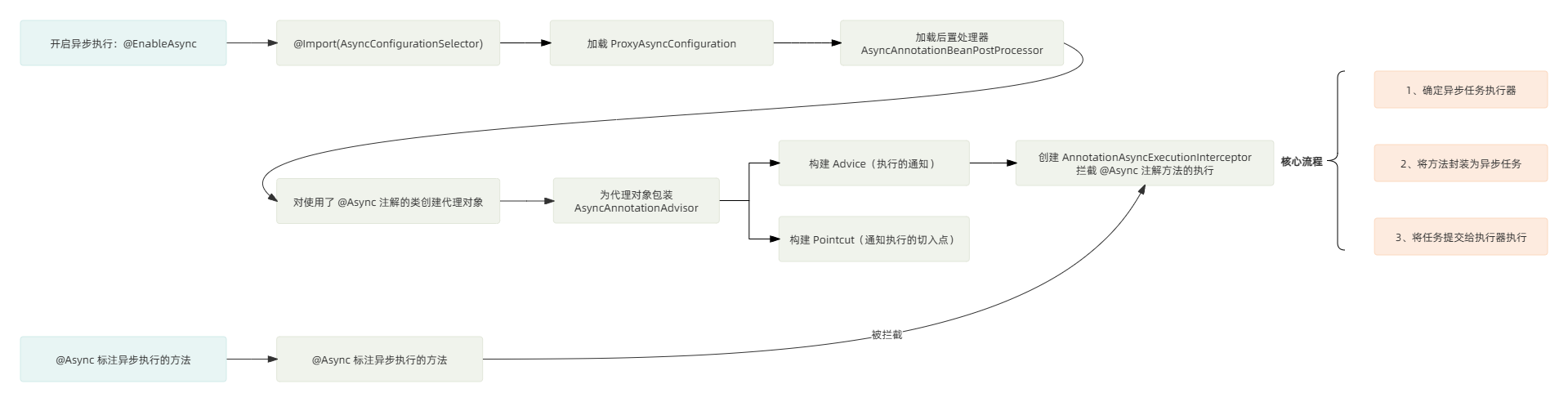
Điểm cốt lõi để hiểu nguyên lý của @Async là hiểu annotation @EnableAsync; annotation này bật tính năng tác vụ bất đồng bộ.
Quy trình chính như hình trên: post processor sẽ tạo proxy object, sau đó việc thực thi method có @Async trong proxy object sẽ đi vào interceptor bên trong Advice, tiếp đó method được đóng gói thành tác vụ bất đồng bộ và gửi đến thread pool để xử lý.
Khuyến nghị sử dụng @Async
Thread pool tùy chỉnh
Nếu không cấu hình thread pool một cách tường minh, bên dưới @Async trước tiên sẽ thử lấy thread pool trong BeanFactory; nếu không lấy được thì sẽ tạo một instance SimpleAsyncTaskExecutor. Về bản chất, SimpleAsyncTaskExecutor không phải thread pool thực sự, vì nó khởi động một thread mới cho mỗi request thay vì tái sử dụng thread hiện có, điều này gây ra một số vấn đề tiềm ẩn, chẳng hạn tiêu tốn quá nhiều tài nguyên.
Chi tiết về việc lấy thread pool có thể tham khảo bài viết này: Phân tích sơ lược nguyên lý thread pool bất đồng bộ bên dưới annotation Async trong Spring | Công nghệ Dewu.
Nhất định phải cấu hình tường minh một thread pool, khuyến nghị ThreadPoolTaskExecutor. Ngoài ra, có thể chỉ định thread pool khác nhau cho các method bất đồng bộ khác nhau tùy theo tính chất và nhu cầu của task.
@Configuration
@EnableAsync
public class AsyncConfig {

    @Bean(name = "executor1")
    public Executor executor1() {
        ThreadPoolTaskExecutor executor = new ThreadPoolTaskExecutor();
        executor.setCorePoolSize(3);
        executor.setMaxPoolSize(5);
        executor.setQueueCapacity(50);
        executor.setThreadNamePrefix("AsyncExecutor1-");
        executor.initialize();
        return executor;
    }

    @Bean(name = "executor2")
    public Executor executor2() {
        ThreadPoolTaskExecutor executor = new ThreadPoolTaskExecutor();
        executor.setCorePoolSize(2);
        executor.setMaxPoolSize(4);
        executor.setQueueCapacity(100);
        executor.setThreadNamePrefix("AsyncExecutor2-");
        executor.initialize();
        return executor;
    }
}
Tên Bean của thread pool được chỉ định trong annotation @Async:
@Service
public class AsyncService {

    @Async("executor1")
    public void performTask1() {
        // Logic của task 1
        System.out.println("Executing Task1 with Executor1");
    }

    @Async("executor2")
    public void performTask2() {
        // Logic của task 2
        System.out.println("Executing Task2 with Executor2");
    }
}
Tránh annotation @Async mất hiệu lực
Annotation @Async sẽ mất hiệu lực trong các trường hợp sau, cần lưu ý:
1、Gọi method bất đồng bộ trong cùng class
Nếu gọi method có annotation @Async bên trong cùng một class, method đó sẽ không thực thi bất đồng bộ.
@Service
public class MyService {

    public void myMethod() {
        // Gọi trực tiếp qua tham chiếu this, bỏ qua cơ chế proxy của Spring, khiến thực thi bất đồng bộ mất hiệu lực
        asyncMethod();
    }

    @Async
    public void asyncMethod() {
        // Logic thực thi bất đồng bộ
    }
}
Điều này là do cơ chế bất đồng bộ của Spring được triển khai thông qua proxy. Lời gọi method bên trong cùng một class sẽ bỏ qua cơ chế proxy của Spring, tức bỏ qua proxy object và gọi trực tiếp thông qua tham chiếu this. Vì không đi qua proxy nên toàn bộ xử lý liên quan đến proxy, tức gửi task đến thread pool để thực thi bất đồng bộ, sẽ không xảy ra.
Để tránh vấn đề này, cách làm được khuyến nghị hơn là chuyển method bất đồng bộ sang một Spring Bean khác.
@Service
public class AsyncService {
    @Async
    public void asyncMethod() {
        // Logic thực thi bất đồng bộ
    }
}

@Service
public class MyService {
    @Autowired
    private AsyncService asyncService;

    public void myMethod() {
        asyncService.asyncMethod();
    }
}
2、Dùng từ khóa static để modifier method bất đồng bộ
Nếu method có annotation @Async được modifier bằng từ khóa static, method đó sẽ không thực thi bất đồng bộ.
Điều này là do cơ chế bất đồng bộ của Spring được triển khai thông qua proxy. Vì static method thuộc về class chứ không thuộc instance và không tham gia inheritance, cơ chế proxy của Spring, dù dựa trên JDK hay CGLIB, không thể chặn static method để cung cấp tính năng enhance như thực thi bất đồng bộ.
Do giới hạn dung lượng, ở đây không giới thiệu chi tiết hơn. Nếu chưa hiểu cơ chế proxy, bạn có thể xem bài viết Giải thích chi tiết Proxy Pattern trong Java do tôi viết.
Nếu cần thực thi logic của một static method bất đồng bộ, có thể cân nhắc thiết kế một wrapper method non-static. Wrapper method này sử dụng annotation @Async và gọi static method bên trong.
@Service
public class AsyncService {

    @Async
    public void asyncWrapper() {
        // Gọi static method
        SClass.staticMethod();
    }
}

public class SClass {
    public static void staticMethod() {
        // Thực thi một số thao tác
    }
}
3、Quên bật hỗ trợ bất đồng bộ
Spring Boot mặc định không bật hỗ trợ bất đồng bộ. Hãy đảm bảo thêm annotation @EnableAsync vào class cấu hình chính Application để bật tính năng bất đồng bộ.
@SpringBootApplication
@EnableAsync
public class Application {
    public static void main(String[] args) {
        SpringApplication.run(Application.class, args);
    }
}
4、Class chứa method có annotation @Async phải là Spring Bean
Method có annotation @Async phải nằm trong một Bean do Spring quản lý. Chỉ khi đó Spring mới có thể áp dụng proxy trong lúc tạo Bean, để proxy chặn lời gọi method và triển khai logic thực thi bất đồng bộ. Nếu method không nằm trong Bean do Spring quản lý, Spring không thể tạo proxy cần thiết và annotation @Async sẽ không có tác dụng.
Kiểu giá trị trả về
Khuyến nghị định nghĩa kiểu giá trị trả về của method có annotation @Async là void và Future.
- Nếu không cần lấy kết quả trả về của method bất đồng bộ, hãy định nghĩa kiểu giá trị trả về là
void. - Nếu cần lấy kết quả trả về của method bất đồng bộ, hãy định nghĩa kiểu giá trị trả về là
Future(thường sử dụngCompletableFuture).ListenableFuturethuộc API Spring phiên bản cũ, không nên tiếp tục sử dụng trong Spring 6.1 và các phiên bản cao hơn.
Nếu định nghĩa kiểu giá trị trả về của method có annotation @Async là kiểu khác, chẳng hạn Object, String, v.v., thì không thể lấy giá trị trả về của method.
Thiết kế này phù hợp với nguyên tắc cơ bản của lập trình bất đồng bộ: caller không nên lập tức mong đợi một kết quả, mà có thể lấy kết quả tại một thời điểm nào đó trong tương lai. Nếu kiểu trả về là Future, caller có thể dùng object Future được trả về để truy vấn trạng thái task, hủy task hoặc lấy kết quả khi task hoàn thành.
Xử lý exception trong method bất đồng bộ
Exception được ném ra trong method bất đồng bộ sẽ không được thread gọi bắt trực tiếp. Method bất đồng bộ trả về Future hoặc CompletableFuture sẽ expose exception thông qua Future; có thể dùng get(), join() hoặc method xử lý exception của CompletableFuture để xử lý. Method bất đồng bộ trả về void không thể truyền exception cho caller; có thể cấu hình AsyncUncaughtExceptionHandler global.
@Configuration
@EnableAsync
public class AsyncConfig implements AsyncConfigurer{

    @Override
    public AsyncUncaughtExceptionHandler getAsyncUncaughtExceptionHandler() {
        return new CustomAsyncExceptionHandler();
    }

}

// Exception handler tùy chỉnh
class CustomAsyncExceptionHandler implements AsyncUncaughtExceptionHandler {

    @Override
    public void handleUncaughtException(Throwable ex, Method method, Object... params) {
        // Ghi log hoặc logic xử lý khác
    }
}
Chưa cân nhắc quản lý transaction
Khi method có annotation @Async cần hỗ trợ transaction, nhất thiết phải sử dụng độc lập annotation transaction trên chính method bất đồng bộ đó.
@Service
public class AsyncTransactionalService {

    @Async
    // Propagation.REQUIRES_NEW nghĩa là Spring mở một transaction mới, độc lập với transaction hiện tại, khi thực thi method bất đồng bộ
    @Transactional(propagation = Propagation.REQUIRES_NEW)
    public void asyncTransactionalMethod() {
        // Các thao tác ở đây sẽ thực thi trong transaction mới
        // Thực thi một số thao tác database
    }
}
Chưa chỉ định thứ tự thực thi method bất đồng bộ
Method có annotation @Async thực thi non-blocking, chúng có thể hoàn thành theo bất kỳ thứ tự nào. Nếu cần xử lý kết quả theo một thứ tự cụ thể, có thể đặt kiểu trả về của method là Future hoặc CompletableFuture, rồi dùng object giá trị trả về để thực thi một method sau khi method khác hoàn thành.
@Async
public CompletableFuture<String> fetchDataAsync() {
    return CompletableFuture.completedFuture("Data");
}

@Async
public CompletableFuture<String> processDataAsync(String data) {
    // Bản thân method đã được @Async dispatch đến executor do Spring quản lý, không gửi lại vào commonPool.
    return CompletableFuture.completedFuture("Processed " + data);
}
Method processDataAsync thực thi sau fetchDataAsync:
CompletableFuture<String> dataFuture = asyncService.fetchDataAsync();
dataFuture.thenCompose(data -> asyncService.processDataAsync(data))
          .thenAccept(result -> System.out.println(result));